Walk into most rooms after dark and you'll find the same thing: one bright bulb stuck in the middle of the ceiling, blasting everything from a single angle. It technically works. You can see. But it also flattens the room, throws hard shadows under everyone's eyes, and makes a space feel more like a waiting room than a home. The good news is that fixing this rarely requires an electrician or a renovation. Most of what makes a room feel warm and considered comes down to where the light sits and what color it gives off.
I spent years as a stylist arranging rooms for clients, and lighting was almost always the cheapest change with the biggest payoff. Let me walk you through how I think about it.
Layer your light in three jobs#
The single most useful idea in lighting is that a room needs more than one source, and those sources do different jobs. Stylists and designers usually break it into three layers.
- Ambient light is the general glow that lets you move around safely. Your ceiling fixture counts here, but so does a bright floor lamp bouncing light off a wall.
- Task light is focused light for doing something: reading, chopping vegetables, putting on makeup. It sits close to the work.
- Accent light is the optional, mood-setting layer. A small lamp on a shelf, a picture light, or a candle-warm bulb in a corner.
When you only have ambient light, the room reads as flat and a little institutional. When you add task and accent layers, your eye gets pulled around the space and it suddenly feels designed. You don't need all three in every room, but most living spaces feel best with at least two.
The trick is that these layers should be on separate switches or plugs so you can mix them. A bright overhead for cleaning, just the lamps for an evening in. That flexibility is the whole point.
Warm vs. cool: get the color right#
Bulbs are sold with a color temperature measured in kelvin (K), and it matters more than brightness for how a room feels. Lower numbers are warm and yellowish; higher numbers are cool and bluish.
As a rough guide, warm light in the lower range feels relaxing and flattering, which is why it suits living rooms and bedrooms. A more neutral, slightly cooler light keeps you alert, which is handy in a kitchen, home office, or bathroom mirror. Very cool, blue-white light can feel clinical at home, so I'd use it sparingly.
The fastest way to make a room feel cozier tonight, with no tools at all, is to swap a cold bright bulb for a warm one and turn off the harsh overhead.
One more thing worth checking: try to keep the bulbs within a single room reasonably consistent. A warm lamp next to a cold one in the same corner looks like a mistake even when you can't name why. Buying the same bulbs in a multipack is an easy way to stay consistent and usually cheaper too.
Lean on lamps instead of the ceiling#
Here's the move that changes rooms the most. Most overhead fixtures light a space from directly above, which is an unnatural and unflattering angle. Lamps light from the side and from lower down, closer to how light actually falls through a window. That lower, sideways glow is what makes a room feel human.
You don't need expensive lamps. A floor lamp in a dark corner and a table lamp at seated height will transform a living room for a modest outlay. Put a bulb you like in each, plug them in, and you've added two layers of light without touching a wire. If you want to make them feel built-in, a cheap smart plug lets you turn a lamp on with a phone or a schedule, no rewiring required.
A quick word on dimmers. A plug-in dimmer or a dimmable smart bulb gives you huge control for very little money. If you want to replace a hardwired wall switch with a dimmer, that's a job I'd hand to a licensed electrician unless you're confident and your local codes allow homeowner work; cutting power at the panel and being sure of what you're doing is not optional.
Easy wins, room by room#
You don't have to redo the whole house. Here are the changes I reach for first.
Living room#
Add a floor lamp to the darkest corner and a table lamp beside the sofa. Use warm bulbs. Now you can light the room for a movie without the overhead glaring at you.
Kitchen#
Task light is everything here. If your counters are dim, look at battery or plug-in under-cabinet lights that stick on without wiring. Anything that involves cutting into cabinetry or running new circuits is a job for a pro.
Bedroom#
Bedside lamps on each side beat a single ceiling light for both reading and winding down. Keep the bulbs warm and consider a low-wattage option for the hour before sleep.
Bathroom#
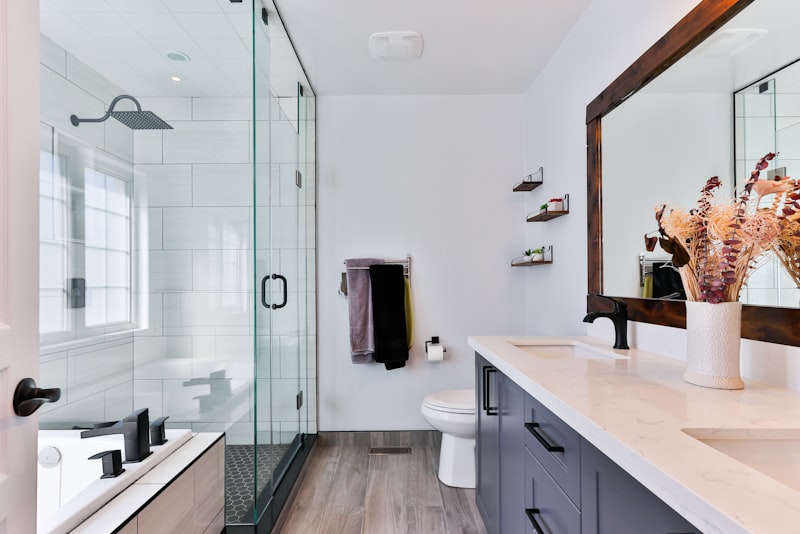
Light from the sides of a mirror is far kinder than light from straight above, which casts shadows down your face. If rewiring isn't on the table, even a small plug-in lamp near the mirror helps for getting ready.
Home office#
This is the one room where cooler, brighter light earns its place. A decent desk lamp positioned to the side of your screen reduces glare and keeps you sharp through the afternoon.
Where to start tonight#
If all of this feels like a lot, don't overthink it. Pick your most-used room, turn off the overhead, and add one warm lamp at a lower height. Sit down and notice how different it feels. That single change usually convinces people that lighting, not furniture, was the thing holding the room back.
From there it's just repetition: a lamp here, a warmer bulb there, a dimmer where you relax. None of it is permanent, none of it is expensive, and all of it is reversible. Lighting is one of the few home upgrades where you can experiment freely, live with it for a week, and change your mind. Start small, trust your eyes, and call a licensed electrician for anything behind the wall.