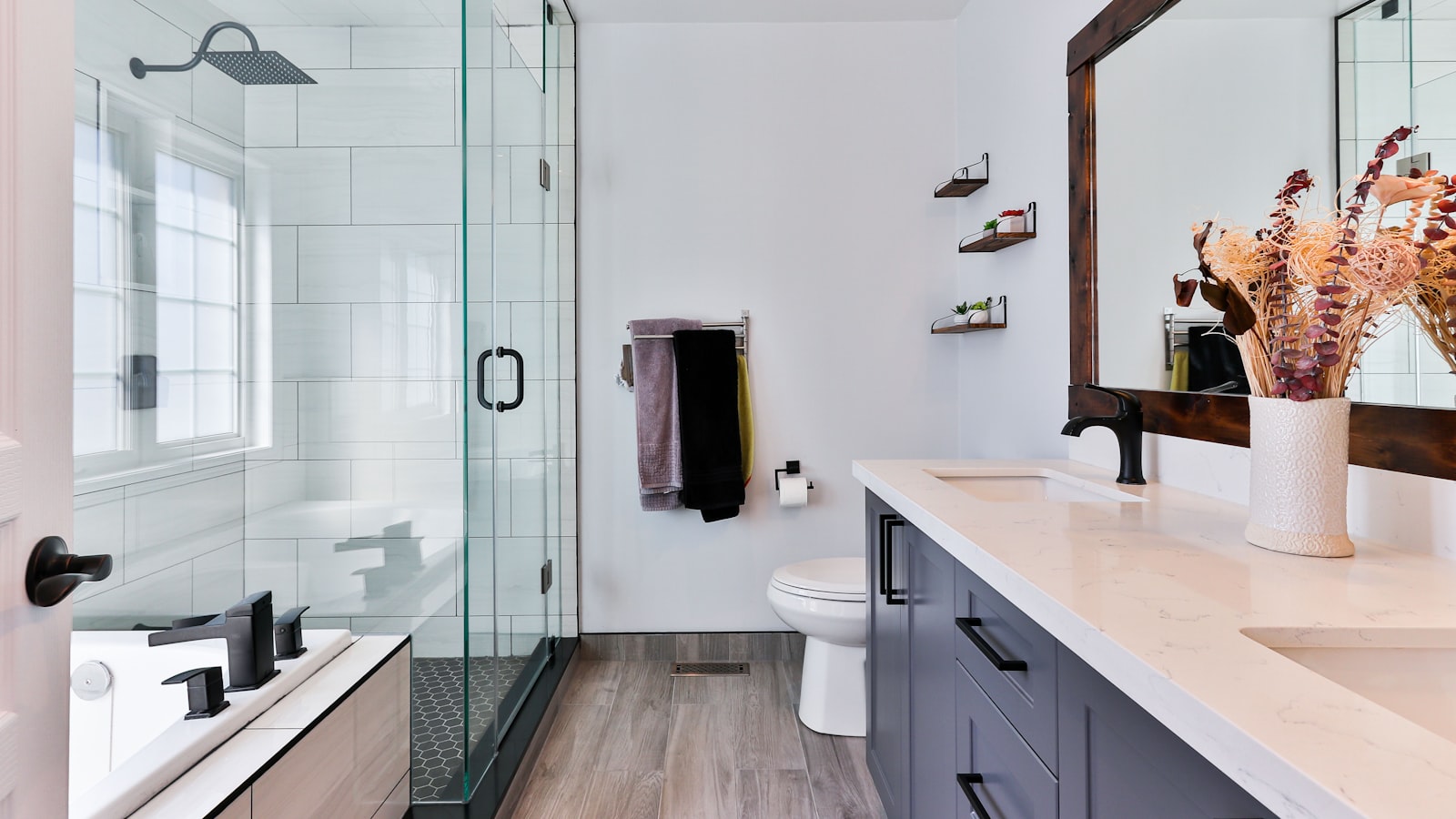
Small bathrooms get a bad reputation they don't quite deserve. Yes, the square footage is unforgiving. But that same smallness is a gift when you're upgrading on a budget, because there's simply less of everything to replace. Less tile to retile. Less wall to paint. Fewer fixtures to swap. The room that frustrates you daily is also the one you can transform over a weekend without remortgaging your life.
When clients used to ask me to "make the bathroom bigger," they almost never meant they wanted to knock down a wall. They meant it felt dingy, cramped, and stuck in another decade. Nine times out of ten, we fixed the feeling without touching the footprint. Here's where that money actually goes furthest.
Start with what your hands and eyes touch#
Walk in and notice what you reach for. The faucet. The towel bar. The cabinet pulls. These are the things you interact with every single day, and dated or corroded versions quietly age the entire room.
Swapping a faucet is one of the most satisfying upgrades you can do, and it's often within reach for a confident DIYer, provided you shut off the supply valves first and you're only dealing with the visible connections. A new faucet, a matching towel ring, and fresh drawer pulls in a consistent finish pull the room together instantly. Pick one metal finish and commit to it across the room rather than mixing three.
If your sink itself is sound, you don't need to replace it. A new faucet on an old basin reads as new. That's the small-bathroom advantage: you can fake a full renovation by upgrading the parts people look at.
Light it like you mean it#
Bad lighting makes a small bathroom feel like a closet. A single dim bulb overhead casts shadows under your eyes and makes the whole space feel gloomy no matter how clean it is.
You have two easy wins. First, the fixture itself: a dated builder-grade light bar can be swapped for something more current. Second, the bulbs: choosing a brighter, warmer-toned light can change the mood entirely without spending much. Layering matters too. A light positioned at face level, beside the mirror rather than only above it, flatters your reflection far more than top-down lighting alone.
A small room lit well feels intimate. A small room lit badly just feels small.
Here's my firm line, though. Anything that involves opening up the wiring, adding a new circuit, or working inside the electrical box is a job for a licensed electrician, and you should follow your local electrical codes. Swapping a bulb is fine. Replacing a fixture on existing wiring may be within your comfort zone if you kill the power at the breaker and confirm it's off. Beyond that, call a pro. Bathrooms mix water and electricity, and that's not where you want to learn a lesson.
The mirror does more than you think#
A mirror is the hardest-working surface in a small bathroom. It bounces light, creates the illusion of depth, and frames how you see yourself every morning. A frameless builder mirror glued to the wall is functional but forgettable.
Upgrading to a framed mirror, or a round one to break up all the hard rectangles in a bath, instantly looks more deliberate. Position it to reflect a light source or a window if you have one, and you'll effectively double the brightness in the room. If you can find a model with built-in storage behind it, even better, because that brings us to the real enemy of small bathrooms.
Win the storage war by going up#
Clutter is what actually makes a small bathroom feel small. Every bottle, tube, and folded towel on the counter eats into the sense of space. The solution is almost always vertical, since you usually have wall you're not using.
- A slim shelf or cabinet above the toilet turns dead air into storage.
- A small tower or ladder shelf in a corner holds towels without crowding the floor.
- A simple set of hooks does more daily work than a single towel bar.
- Inside the vanity, a tiered organizer or a couple of bins keep chaos from spreading to the counter.
The goal isn't to add more stuff. It's to get the necessary stuff off the surfaces, so the eye has somewhere to rest. A clear counter reads as luxury, even in the tiniest room.
The refresh nobody photographs: grout and caulk#
This is the upgrade I push hardest because it costs almost nothing and changes everything. Over time, grout darkens and caulk gets that grim mildewed look around the tub, sink, and where the toilet meets the floor. No amount of cleaning fully resets it once it's gone.
Cleaning and, if needed, refreshing grout lines brightens tile dramatically. And removing the old, peeling caulk around the tub or sink and laying down a clean, even new bead is genuinely transformative. It's fiddly, low work, and your knees will complain, but a crisp white line where there used to be a moldy gray one makes the whole bathroom look maintained and cared for. Make sure the surface is bone dry before you apply new caulk, or it won't seal properly and you'll be redoing it in a season.
Paint deserves a quick mention too. A small bathroom takes very little paint, so this is your chance to use a moisture-tolerant finish in a color you actually love. Just ventilate well and let it cure properly given the humidity these rooms see.
None of this is glamorous on its own. A faucet here, a bead of caulk there, a shelf you finally hung. But small bathrooms reward exactly this kind of attention, because every fix occupies a larger share of a small space. Stack four or five of these together and you walk into a room that feels considered instead of compromised. You don't need more square footage. You need the square footage you have to stop looking tired, and that's well within your reach.