Nobody is born knowing which tools to own. Most of us start with a single mystery screwdriver in a kitchen drawer and slowly accumulate the rest in a panic, buying a hammer the night before we need it. There's a better way, and it doesn't involve a giant red toolbox or a wall of gleaming gadgets you'll use once. A genuinely useful home toolkit is small. A dozen or so things will carry you through almost everything a home throws at you, from a wobbly chair to a picture that needs hanging.
I've assembled a lot of these kits, both for myself on job sites and for clients moving into their first place. What follows is the list I actually give people, and the reasoning behind each pick, because a tool you understand is a tool you'll use.
How to buy: decent, not fancy#
Before the list, one principle that will save you money and frustration: buy in the middle.
The cheapest tools, the bargain-bin sets in flimsy plastic cases, tend to fail at the worst moment. Screwdriver tips round off, pliers don't grip, and tape measures jam. But the most expensive professional gear is built for someone using it forty hours a week, and you're paying for endurance you'll never need. The sweet spot is a solid mid-range tool from a reputable brand. It'll feel reassuringly heavy, work properly, and last for decades of occasional use.
The right tool doesn't just make a job easier, it makes the job safe. Forcing the wrong tool is how people slip, strip screws, and get hurt.
Buy tools one at a time as you understand why you need them, and you'll end up with a kit that fits your home instead of a box of strangers.
These are the unglamorous workhorses. Start here.
- A claw hammer. Drives nails and pulls them out. A medium weight suits most people; too heavy and your aim suffers, too light and you'll be tapping forever.
- Screwdrivers, or one with bits. You need both flathead and Phillips, in a couple of sizes. A single handle with interchangeable bits saves drawer space and covers more screws.
- A tape measure. The cornerstone of doing anything once instead of twice. Measure, write it down, measure again before you cut or buy.
- A spirit level. Your eye lies about what's straight. A small level keeps shelves and frames honest, and many phones have a passable level app in a pinch.
- An adjustable wrench. Grips nuts and bolts of varying sizes, which matters for furniture assembly and minor plumbing fittings.
- Pliers. A standard pair plus a needle-nose pair handle gripping, bending, and reaching into tight spots.
- A utility knife. For opening boxes, trimming, and scoring. Retract the blade every single time you set it down, and cut away from your body.
That short list, kept somewhere you can actually find it, solves a remarkable share of everyday problems.
Add a cordless drill early#
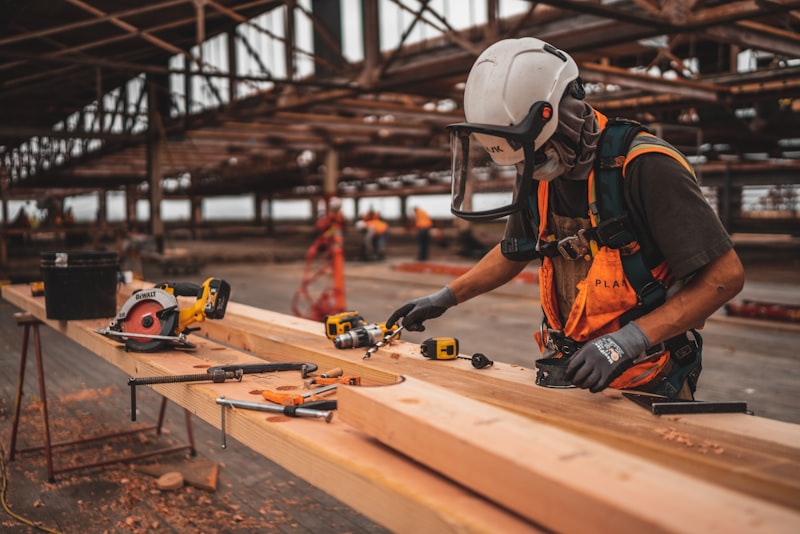
If you buy one powered tool, make it a cordless drill/driver. It does two jobs: it drills holes and it drives screws far faster and with less wrist pain than a screwdriver. The moment you assemble flat-pack furniture, hang anything heavy, or fix a loose hinge, you'll wonder how you managed without it.
You don't need the biggest, most powerful model. A modest cordless drill with a set of drill bits and screwdriver bits covers home use comfortably. Learn the clutch, the numbered ring near the chuck, because it stops you from over-driving a screw and stripping it or splitting the wood. Start on a low setting and work up.
When drilling into a wall, pause and think about what's behind it. Pipes and electrical cables often run near outlets, switches, and fixtures, and an inexpensive detector can flag them before you commit. Drilling blind into a wall is one of the few low-stakes-looking jobs that occasionally goes very wrong.
The measuring, marking, and tidying extras#
A few cheap additions make every job cleaner.
A pencil sounds trivial until you're trying to mark a wall with whatever's nearby. Keep one with the tools. Painter's tape marks positions without damaging surfaces, holds things temporarily, and protects edges when you paint. A small assortment of screws, nails, and wall anchors means you're not making a hardware-store run mid-project. And a basic stud finder, mentioned above, is the difference between a shelf that holds and a shelf that tears out of the plaster.
I'd also keep a simple flashlight or headlamp in the kit. So many household problems live in dark corners: under sinks, behind appliances, inside cabinets. Being able to see what you're doing is half the battle, and a headlamp keeps both hands free.
Know where to stop#
Owning tools is empowering, and that's exactly why it's worth saying plainly: some jobs aren't yours to do, no matter how good the kit. Anything touching your home's electrical wiring, gas lines, plumbing hidden behind walls, or anything structural belongs to a licensed professional, and often it's required by your local codes for safety and insurance reasons. Working at height on a ladder, or running power tools you're unsure of, deserves the same caution.
A good toolkit isn't about doing everything yourself. It's about confidently handling the small stuff, the tightening and hanging and fixing that fills ordinary life, and recognizing the line where a pro takes over. Knowing that line is itself a skill, and it's the mark of someone who works on their home safely rather than luckily.
Build it slowly#
Resist the urge to buy a giant pre-packed set today. Start with the core hand tools, add a cordless drill when a job demands it, and pick up the extras as you meet the problems they solve. Within a year you'll have a kit that's entirely yours, every piece earned and understood. That's worth far more than a heavy box of tools you've never touched, and your future self, faced with a wobbly table on a Sunday night, will thank you.